



.webp)
Every January, we start fresh. We make resolutions to eat better, exercise more, save money, or finally tackle that long list of “someday” goals. For a few weeks, motivation is high—but by February, many of those resolutions quietly fade away.
Goals are dreams with deadlines. A goal without a plan is just a wish. This month, we’re focusing on a goal-setting approach that doesn’t just inspire, it works! By creating the same SMART goals that our students use, you can make sure that you meet, or surpass, your goals!
Why SMART Goals Work
SMART goals are a simple but powerful framework that turns big ideas into achievable action. SMART stands for Specific, Measurable, Achievable, Realistic, and Time-bound. Instead of vague intentions, SMART goals give a clear roadmap forward.
At LPP, every student enters the program with initial goals. Those goals don’t sit untouched in a folder; they’re revisited, reviewed, and refined throughout a student’s time with us. As students grow, their goals grow with them, academically, personally, and professionally.
This process matters because SMART goals:
-
Provide clarity and direction
-
Build accountability
-
Break big dreams into manageable steps
-
Encourage reflection, adjustment, and resilience
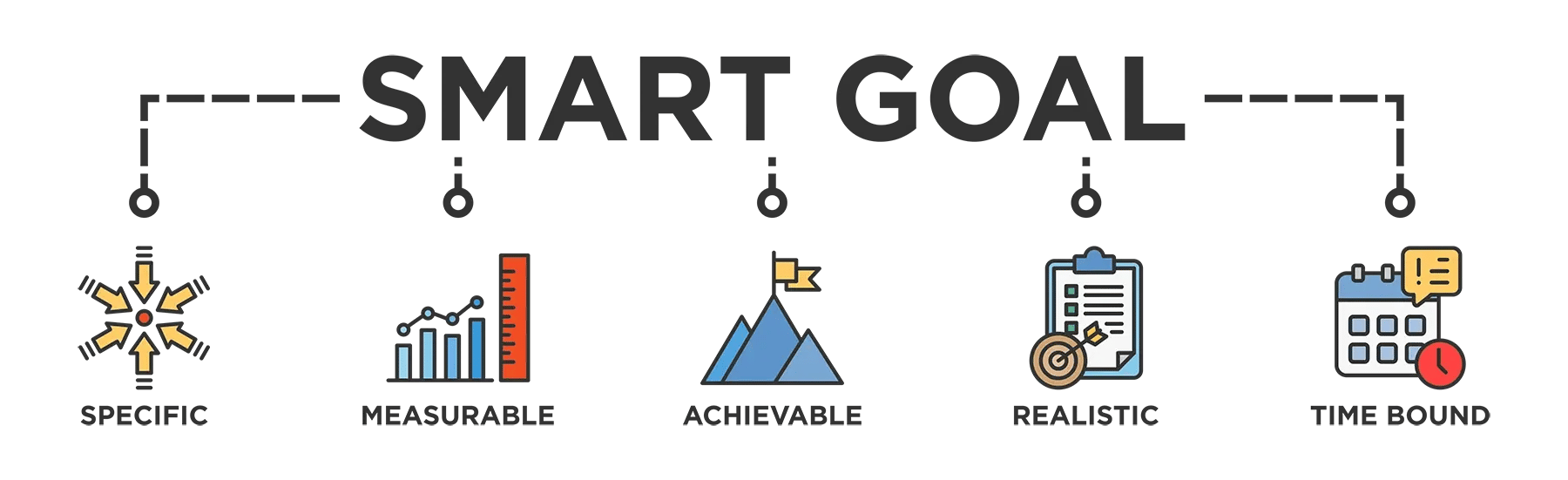
SMART Goals vs. New Year’s Resolutions
Most New Year’s resolutions sound familiar: “I’ll exercise more.” “I’ll do better in school.” They’re well intentioned, but often too general to stick.
SMART goals are different.
| Resolutions | SMART Goals |
|---|---|
| General (“I’ll exercise more”) | Specific (“I’ll attend yoga class 3x/week for 4 weeks”) |
| Open-ended | Measurable |
| Motivation-driven | Action-driven |
Because SMART goals are clear and time-bound, they’re easier to track and easier to keep. We see this with our students every day: when they know what they’re working toward and how they’ll get there, progress follows.
What a SMART Goal Is—and Isn’t
A SMART goal clearly defines success.
SMART goal example:
“I will improve my math grade from a B to an A by the end of the semester by attending weekly tutoring sessions.”
Not-so-SMART goal:
“I want to do better in school.”
“I’ll exercise more.”
The difference is clarity. SMART goals include a plan, a way to measure progress, and a deadline—turning intention into action.
Tips & Tricks for Setting Your Own Goals
Whether you’re a student, parent, or professional, these strategies can help:
-
Start small and build momentum
-
Write your goals down and revisit them weekly
-
Break goals into steps you can act on right away
-
Celebrate progress, not just the finish line
-
Share your goal with a friend, mentor, or accountability partner
And remember, progress happens one step at a time.
Ready to Set Your Goal?
Goal-setting is a skill anyone can practice—just like our Liberty students do every day. As we move into the new year, challenge yourself to set one SMART goal for January and track your progress.
At the Liberty Partnerships Program, we help students set and achieve meaningful goals every day.
What goal will you set for yourself this month?
.webp)